


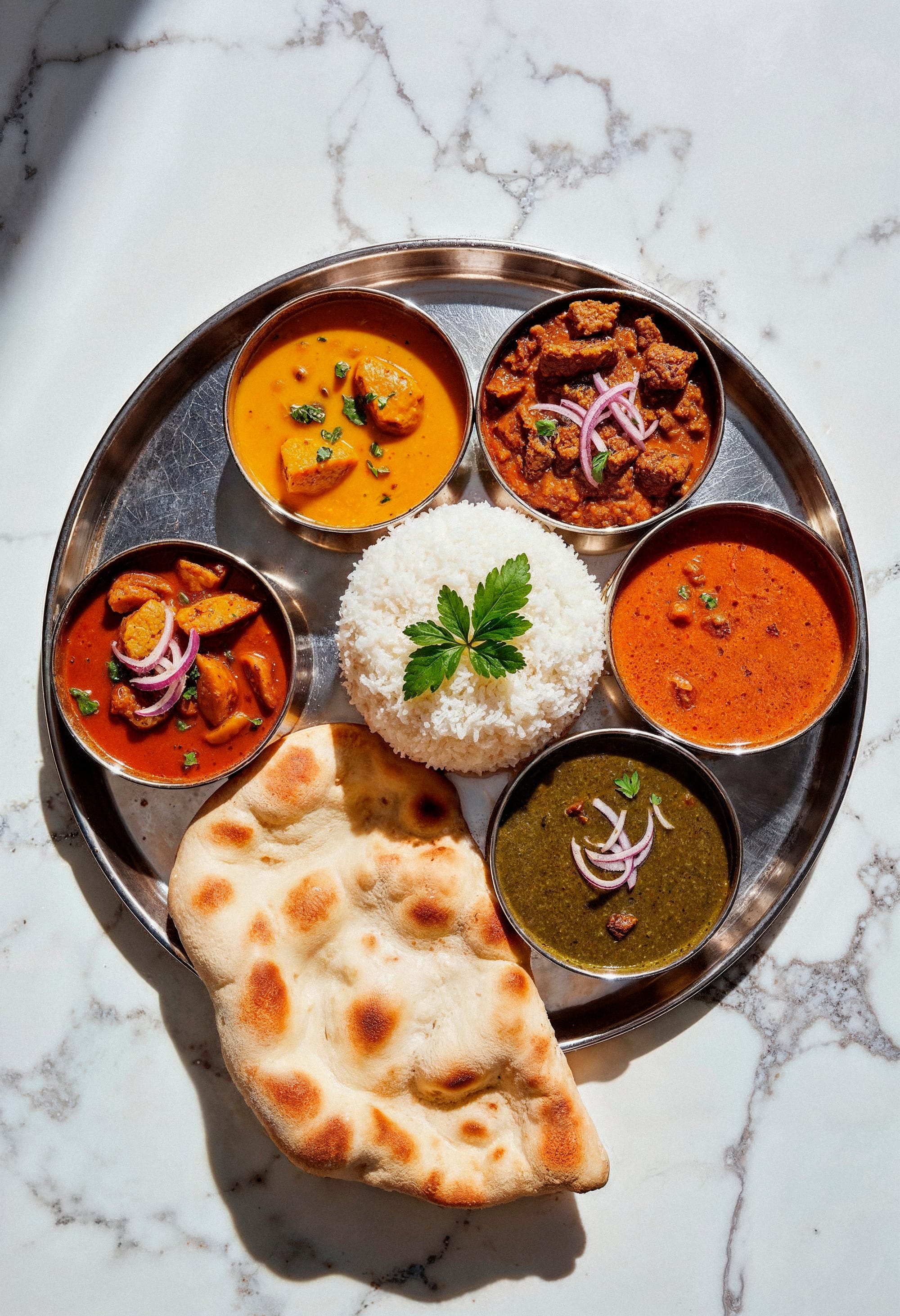
Food (Sanskrit— bhojana,“that which is to be enjoyed,” Hindi— khana, Tamil— shapad) presents a way to understand everyday Indian culture as well as the complexities of identity and interaction with other parts of the world that are both veiled and visible. In India today,with a growing economy due to liberalization and more consumption than ever in middle class life, food as something to be enjoyed and as part of Indian culture is a popular topic.
From a 1960s food economy verging on famine, India is now a society where food appears plentiful, and the aesthetic possibilities are staggering. Cooking shows that demonstrate culinary skills on television, often with celebrity chefs or unknown local housewives who may have won a competition, dominate daytime ratings. Local indigenous specialties and ways of cooking are the subjects of domestic and international tourism brochures.
Metropolitan restaurants featuring international cuisines are filled with customers. Packaged Indian and foreign foods sell briskly in supermarkets, and indigenous street food and hole-in-the wall cafés have never been as popular. Yet lifestyle magazines tout healthy food, nutritious diets, locally sourced ingredients, and sustainable and green alternatives.
India’s understanding of its own cultures and its complex historical and contemporary relations with foreign cultures are deeply evident in public conceptualizations of food as well as in culinary and gastronomic choices and lifestyles
Gastronomic Calendars, Rituals, and Seasonality
In India as elsewhere, food culture is shaped by climate, land, and access to natural resources. The food system emphasizes eating agricultural and natural produce “in season,” such as mangoes and local greens during the summer, pumpkins during the rainy monsoon months, and root vegetables during the winter months. This emphasis is based upon a belief that in-season foods are more potent, tastier, and of greater nutritional value, although the yearround availability of many foods due to technology are beginning to change eating habits.
Cooks who are native to India are aware of culinary cycles and of multiple-dish recipes using fruits and vegetables of the season, some deemed “favorites” within caste groups and families. For example, prior to the ripened mango harvest of May and June, tiny unripe mangoes are harvested and pick- led in brine.
The ripe mango and the pickled mango are the same species but are clearly different culinary tropes with different characteristics that are some- times attributed with fortifying, healing, auspicious, and celebratory values, based on taste, color, and combination.
Connoisseurs are aware of desirable foods in local areas and sometimes travel great distances to acquire the first or best product of the season. Seasonality and regionality are also part of wed- ding celebrations, funerary rites, and domestic feasts.
The winter peasant menu of the Punjab sarson ka saag, a stew of spicy mustard greens believed to “heat” the body, and makki ki roti (griddled corn flatbreads), are imported to haute tables in Delhi restaurants as “rustic” fare..


